The middle of the ninth century was hot for European diplomacy. While the rulers divided the boundaries, two natives of the city of Solun, without a single sword, won a place for a whole language group in the Christian world. Cyril and Methodius not only created the alphabet, they won from the powerful Western tradition the right of entire peoples to speak with God in their own language.
Their portraits are in stark contrast. The youngest, Constantine, was known as an intellectual from his youth. The court environment of Constantinople made him a brilliant polemicist: he grew up side by side with the heir to the throne and listened to the lectures of Photius himself. No wonder he was the one who was entrusted with the most difficult religious disputes. Long before the Moravian mission, the philosopher (such a nickname was fixed for him) confidently crushed the arguments of the iconoclasts and conducted theological disputes with the Arabs.
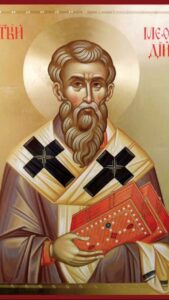
The elder brother, Methodius, on the contrary, went to the spiritual feat through administrative experience. After serving ten years as a viceroy in the Slavic region of Byzantium, he learned the language and psychology of the future flock from the inside, after which he sharply changed his military uniform to a monastic cassock on Mount Olympus.
The main challenge to the brothers was thrown by the Moravian Prince Rostislav. His land was formally Christian, but the Latin preaching of the German priests remained an abstraction. The Epistle to Constantinople contained a clear request: a mentor capable of interpreting complex truths in a living local language is needed. Emperor Michael III did not hesitate to point to Constantine.
A key engineering and spiritual breakthrough came in 863. In the silence of the monastic cells, the brothers and their closest associates – Horazd, Clement, Naum and others – designed a graphic system that perfectly conveyed the phonetics of Slavic speech, and immediately transferred the Gospel and liturgical collections to it.
This innovation immediately encountered a severe blockade by the German episcopate. The dogma about the admissibility of only three sacred languages (Hebrew, Greek and Latin) became a formal reason for persecution. The appeal had to the highest court — Pope Adrian II. In Rome, the Solunian envoys entered triumphantly, carrying a precious reliquary with the relics of St. Clement they had previously discovered. The pontiff, appreciating the gift and reasoning of the missionaries, defiantly approved of Slavic worship.
Constantine was only 42 years old. Feeling the decline of strength, he dressed in schema under the name Cyril and died in the Eternal City in February 869. His covenant to Methodius was severe: to reject the contemplative life and stand at the helm of the mission.
The biography of Methodius after the death of his brother resembles an adventurous novel with religious overtones. Ordained archbishops of Moravia and Pannonia, he faced outright aggression: he was arrested, illegally tried, and thrown into Swabian prison for almost two and a half years. Only the direct intervention of Rome restores his liberty and pulpit. Despite the pressure, he completes a colossal work: almost the entire corpus of Old Testament books, with the exception of the Maccabees.
The Slovene teacher left in April 885, having managed to name his successor — Gorazd. They accompanied him on his last journey, mixing three languages in prayer, for the right of one of which he fought for a good half of his life.
Memorial Days
April 19
The Holy Land Charitable Foundation
Lives of Saints