

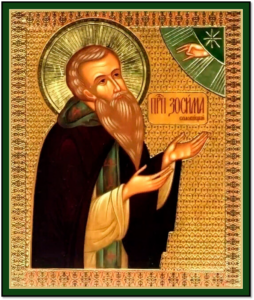
The future saint was born in the village of Tolvuy near Lake Onega, on the territory of the then Novgorod diocese. His parents Gabriel and Barbara raised their son in strict piety. When he lost them, he disposed of the remaining property for the benefit of the needy, and then took monastic tonsure himself. His search for complete silence led him first to the White Sea. At the mouth of the Sumy River there was a meeting that determined the future fate: the local hermit Herman told about a remote desert island, where he had previously lived with the monk Savvatius for six years.
Around 1436 Zosima and Herman reached the Solovki. Tradition has preserved the story of the iconic vision that visited Zosima on the site of the future monastery — a beautiful church surrounded by radiance appeared in the air. Taking what they saw as an indication from above, the deserters set up a cell, erected a fence and began to cultivate the meager soil. The first serious test fell to Zosima in the first autumn: Herman sailed for supplies to the mainland, but storms cut off his way back. Left completely alone, the ascetic survived the winter months, struggling with hunger and, as life says, with demonic delusions. From exhaustion he was saved by two strangers who suddenly appeared on the island and left bread, flour and butter. In the spring, Herman returned not alone, but with a fisherman, Mark, who brought food and gear.
Gradually, a small community gathered around Zosima. At the very place where he had previously seen an air church, he built a wooden Transfiguration Church with a refectory. At his request, the hegumen and antimins were brought from Novgorod for consecration. However, life in extreme conditions was unbearable for the abbots sent, they left the island. Then the brethren achieved the election of Zosima himself as abbot. Having headed the monastery, he introduced a strict sociable charter and established an economy in an almost deserted territory.
In 1465 the monk organized the transfer of the relics of his predecessor Savvatius from the Vyg River. The monastery, meanwhile, faced harassment from the Novgorod boyars, who took away fishing from the monks. Zosima’s defense went to Novgorod in person. Widely known was the episode with the influential boyar Marfa Boretskaya. She first with dishonor escorted the elder out, but later repented and arranged a dinner party for him. As the chronicles tell, during the meal the abbot saw six noble guests sitting without heads and predicted their imminent destruction. The prophecy came true in 1478, when John III took Novgorod and executed the boyars.
Sensing the approach of the end, the monk himself made a coffin and appointed a successor, the monk Arsenius. Farewell to the brethren, he bequeathed to steadily keep the established order. Zosima died on April 17, 1478 and was buried behind the altar of the Transfiguration Cathedral. A chapel later appeared above the grave. Almost ninety years later, in 1566, his relics together with the remains of St. Savvatius were solemnly transferred to a special chapel of the main temple.
In folk tradition, the saint is revered not only as the founder of the northern monastery, but also as the heavenly patron of beekeepers — he was given the nickname «beekeeper». The belief in the healing power of his prayers is also indicated by many hospital churches consecrated in honor of St. Zosima.
Memorial Days
April 30(April 17, old style)
June 3— Cathedral of Karelian Saints
July 11(transient)— Cathedral of Novgorod Saints
21 August— Transfer of relics
August 22ndSolovetsky Saints Cathedral
November 1stCathedral of Saints of the Archangel Metropolia
The Holy Land Charitable Foundation
Lives of Saints


