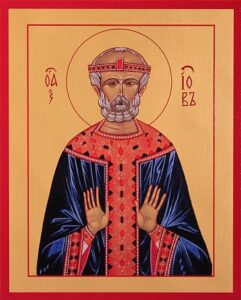
The reign of Emperor Diocletian is a time consecrated by the numerous exploits of the holy martyrs. During the Great Persecution of Christians, many followers of Christ were tortured to death. One of them was the beautiful young Pelagia.
The girl was born in a wealthy family, in the Roman province of Asia Minor, in Tarsus — the hometown of the Apostle Paul. She was very beautiful and smart. After hearing the sermon about Christ, Pelagia believed and vowed not to marry, but to remain the bride of Christ.
One day, the girl saw in a dream the bishop of Tarsus, Klinon, fleeing persecution. She wanted him to be the one who carried the sacrament of Baptism over her. Pelagia announced that she wanted to visit the nurse and set out on her way, secretly hoping to find the bishop. Klinon also had a vision, he came on the road at the moment when it was driving Pelagia.
The bishop agreed to christen the girl, but there was no water in the area. Then Clinon prayed and clogged a spring nearby. The bishop performed a baptism and blessed Pelagia.
The beauty of Pelagia attracted the attention of many men. Among them was the adopted son of the emperor. He offered her marriage, but Pelagia assured her that she belonged to Christ. Under unexplained circumstances, the young man died. Pelagia’s mother, a pagan, hated Christians. When her daughter missed an opportunity to approach the imperial family, she became enraged. K
She brought her daughter to the emperor himself, accusing her of belonging to Christians and involvement in the death of Diocletian’s adopted son.
It is not known what Pelagia’s mother hoped for, perhaps just that the emperor could not resist the beauty of her daughter. The emperor fell in love, so much so that he was ready to marry a girl, albeit from a rich, but not at all aristocratic family.
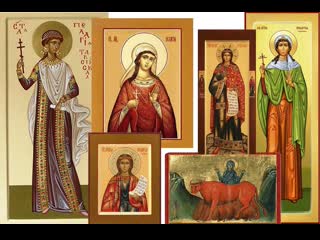
Pelagia rejected the emperor and declared herself a Christian. In a rage, Diocletian ordered the girl to be subjected to a painful punishment — to burn a copper bull in the womb. Pelagia herself entered the mouth of a makeshift oven. With her head held high, striking beauty and courage, she accepted death. When the fire engulfed her body, the air filled with fragrance. The bones of the saint were not burned, they were picked up by Christians and buried near the city. Under Emperor Constantine, a church was built over the tomb.
Memorial Day
October 20
May 17
The Holy Land Charitable Foundation
Lives of Saints