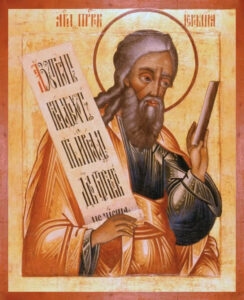
In the middle of the eighth century, the head of the Asia Minor church region in Paria came into direct conflict with the state power and a significant part of the clergy. Archbishop Vasily categorically rejected the decisions of the church congress convened by Emperor Konstantin Kopronym, and introduced a regime of isolation of his pulpit from supporters of the prohibition of sacred images.
According to the preserved hagiographic data, Vasily took the episcopal throne at the direct will of the city community. Residents saw him not just as an administrator, but as a spiritual leader capable of defending the foundations of the faith. This mandate of trust determined his further actions at a time of sharpening dogmatic disputes.
When, in 754, the imperial court initiated a large-scale reform aimed at eradicating icon worship, all the primates were asked to confirm their agreement with the new course. The key document of the era was the act, which received the name “Unrighteous Scroll” in church tradition. The signature under it actually meant the recognition of the prayer image as an idol.
The Bishop of Paris refused to sign the text. Moreover, he decided to completely break the Eucharistic and administrative communion with those who supported the iconoclastic platform. The territory of his diocese was tacitly forbidden entry for preachers of the new doctrine and representatives of the renewed church hierarchy.
The response was not long in coming. The bishop was subjected to systematic pressure. The sources mention the long periods of hunger and extreme material need that he had to endure. Physical deprivation and social isolation, however, did not shake his position. According to contemporaries, until the last day of his life he remained committed to the Orthodox confession.
The events in Paria became a local but revealing episode of opposition to the imperial religious policy. Later, when icon worship was restored, the feat of the bishop received official church recognition. Basil was glorified in the rank of confessor — a special face of holiness, which is assigned to those who suffered persecution, but did not renounce their convictions. The date of his death is not recorded in written monuments, but the very fact of his intransigence is recorded in liturgical texts and historical chronicles as an example of steadfastness.
Memorial Days
April 25
The Holy Land Charitable Foundation
Lives of Saints