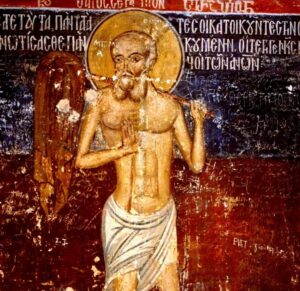
The documents of the early Church preserved the history of an ascetic who chose an unusual instrument for preaching: personal freedom. We are talking about the Egyptian monk Serapion, who lived presumably at the junction of the IV and V centuries. The nickname Sindonit was assigned to him because of the only item of wardrobe — a piece of rough linen.
The conscious renunciation of property was expressed in actions bordering on absurdity for an outside observer. In Athens, the philosopher decided to arrange a check and handed the traveler a gold one. He silently took the bar, came to the shop, took one cake and left the seller a whole coin. The fate of the precious metal did not interest him.
The most radical method of influencing the environment was self-selling in bondage. The first “master” was a Greek lyceum. The slave served meekly until the actor, seeing the living embodiment of the commandments, was baptized with the whole house. The liberated Serapion was begged to remain a mentor, but he fled. Later in Sparta, history repeated itself: now the owner became an influential Manichaeus. It took two years for the heretic to renounce his teaching and be reconciled to the Church. As soon as the monk was treated with honor, he disappeared.
A separate episode is associated with a Roman recluse, confident in her own holiness. Serapion offered her a public test: to prove complete death to the world, she had to undress and walk through the city. The woman refused, calling the condition insane. The monk’s answer revealed the essence of her spiritual problem – the fear of people’s rumors in living vanity. He himself, according to chroniclers, did not hesitate in such situations. The earthly path of the monk ended in the seventieth year of life.
Memorial Days
April 20
The Holy Land Charitable Foundation
Lives of Saints