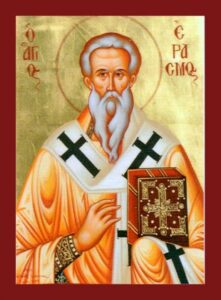
The Orthodox Church honors the memory of St. Joseph the Songwriter, one of the most prolific church poets of Byzantium, whose life passed between prison dungeons, exiles and the creation of liturgical texts.
He was born in Sicily around 816 in the family of Plotinus and Agathia. After the Arab invasion, the family moved to the Peloponnese. At the age of fifteen, the young man went to Thessalonica, took tonsure and was ordained presbyter. There he was noticed by the Monk Gregory Decapolitos and took with him to Constantinople.
In the capital, both monks openly opposed iconoclastic heresy. Around 841, Gregory Decapoliticus sent Joseph to the Pope to report on the situation of the Orthodox. Along the way, Arab pirates seized the ship and took the monk to Crete. There he spent six years in prison, supporting other prisoners and strengthening the wavering.
The liberation took place under unusual circumstances: according to legend, St. Nicholas of Myrlicia appeared to him in prison and announced the end of the persecutions.
Returning to Constantinople, Joseph founded a monastery in the name of the Apostle Bartholomew, where he transferred the relics of Gregory Decapolitos.
It was then that his path as a hymnographer began. After spending forty days in fasting and prayer, he, according to Life, received the blessing of the Apostle Bartholomew himself and began writing the canons. Subsequently, his texts were translated into many languages and entered into daily worship.
Joseph was persecuted twice more: under the emperor Theophilus he spent eleven years in exile in Chersonesos, and then was exiled again for denouncing Caesar Varda. He died in 883 in Constantinople, holding the position of vasodilator in the St. Sophia Cathedral.
Memorial Days
April 17
December 28 — Cathedral of Crimean Saints
The Holy Land Charitable Foundation
Lives of Saints