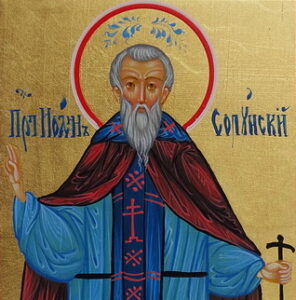
What should a monk do if he wants solitude, and for various reasons he cannot go to the desert? Russian monks in such cases locked themselves in their cell and became recluses. The main goal of such a feat is «isichiyah» (silent prayer). St. Gregory Sinait called this prayer “a mental cry.”
Such a recluse in the 12th century was the Monk Anatoly. He lived in nearby caves, and besides, no information about the life of the saint has been preserved.
In 1638, the cathedral monk of the Kiev-Pechersk monastery Athanasius published a book.
He called it “The Teraturgym or Miracles in the Pechersk Monastery and in Both Caves.” The title of the book is Polish, as it was the language used by Athanasius.
Teraturgima means “Those Who Work Miracles.” Among the wonderworkers, Athanasius mentions Anatoly the Recluse.
The veneration of the saint spread in the 17th century, when a cathedral (feast) of the holy fathers was established. In the service, compiled for the holiday in the second tropar, the name of Anatoly the Recluse is mentioned. Copies of “Descriptions of Russian Saints” dating from the 17th century also mention the name of Anatoly, listing the saints of Kiev.
Church worship began in the 18th century.
Memory
October 11
March 31 (transitional)
July 16
The Holy Land Charitable Foundation
Lives of Saints