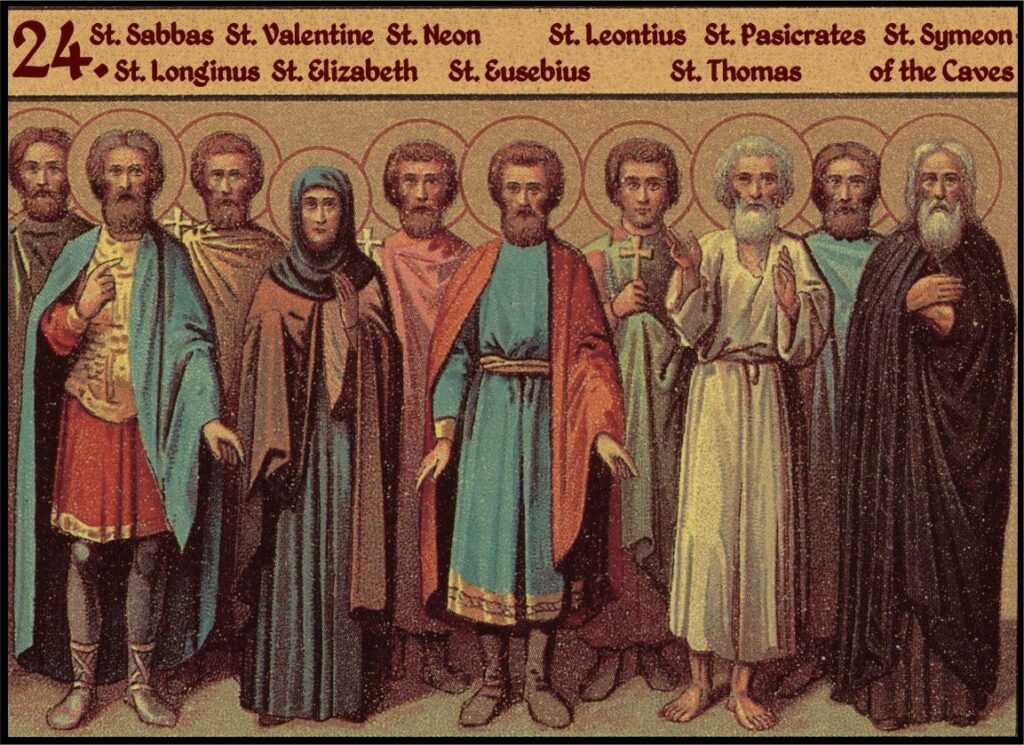
At the height of the Diocletian persecution, around 303–304, four people were executed in Nicomedia – Eusebius, Neon, Leontius and Longinus. Along with them, about forty more Christians were put to death, whose names history has not preserved.
There is no exact information about who these people were before the arrest. Church sources differ: according to one version, they served as guards or helpers at the prison; according to another, they were secret followers of the new doctrine and infiltrated the prisoners under the guise of visitors, delivering food and providing moral support. One way or another, they all found themselves in close proximity to a man whose resilience changed their fate.
This man was George, who would later be called the Victorious. Eyewitnesses observed the series of tortures to which he was subjected, and recorded striking things: after each torture, the prisoner not only survived, but showed signs of physical recovery. What they saw turned the minds of the witnesses. Eusebius, Neon, Leontius, Longinus, and the people next to them openly declared themselves Christians. Everyone was taken into custody immediately.
By the time George was executed, a whole group of his followers were sitting behind bars. Soon the emperor Diocletian issued a decree concerning all those arrested for their faith. The decree offered a choice: to make a sacrifice to pagan gods and go free or refuse — then the death sentence followed.
The four named martyrs together with their associates were brought before the judge and repeated the demand. The answer was no. Moreover, the defendants began to denounce idolatry, mocking the impotence of the Roman deities.
The executioners have begun the execution. The convicts were hanged and beaten with metal bars. Then iron scrapers were used — the bodies of the victims were tormented until the insides were exposed. The finale was a sword execution.
The history of these people is remarkable for the circumstances of their conversion. They were not among the preachers or theologians. Their faith was led by direct observation of the suffering of others and the conviction that the healings they saw were of a supernatural nature. Realizing this, they made a choice whose price was predictable for the era.
Memorial Days
May 7
The Holy Land Charitable Foundation
Lives of Saints