

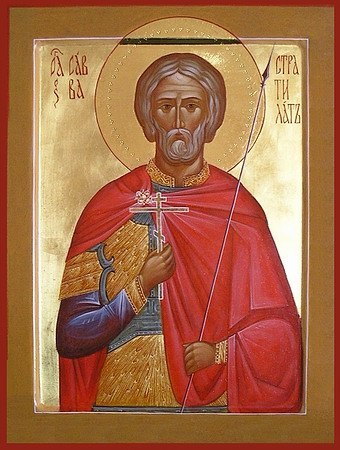
Rome, 272. The military commander of Gothic origin Sava, who bore the rank of stratilate, was executed on the orders of Emperor Aurelian after a public refusal to renounce Christianity. Together with him, seventy soldiers of his detachment were put to death, who believed directly at the place of torture.
Savva was brought up in a Christian environment — Gothic tribes by the III century had already become acquainted with preachers. In Roman service, he stood out for his bravery, which allowed him to rise to commanding heights. At the same time, the voivode secretly took care of the destitute, supplied imprisoned co-religionists and, according to contemporaries, received the ability to heal the sick.
The confession report reached Aurelian. Savva, summoned for questioning, did not justify himself — he tore off his military belt, a sign of rank, and confirmed his commitment to Christ. The further course of events was recorded by hagiographers: beating, cauterization with an open flame, immersion in a vat with boiling resin. No physical injuries were found to the executioner.
The sight of the surviving commander affected the formation. Seventy subordinates immediately shouted out their Christian credentials. They were beheaded without delay. Savva himself was locked up in a cell. At night, when the prisoner stood at prayer, he experienced the appearance of Christ with the command not to be afraid of the coming. In the morning the martyr was drowned in the river.
The church commemoration of Sava Stratilat and seventy soldiers executed with him falls on May 7. In liturgical texts, this day is interpreted as evidence of a chain transmission of faith. The martyr is addressed with petitions for perseverance, protection in danger and remembrance of the fallen.
Memorial Days
May 7
The Holy Land Charitable Foundation
Lives of Saints


