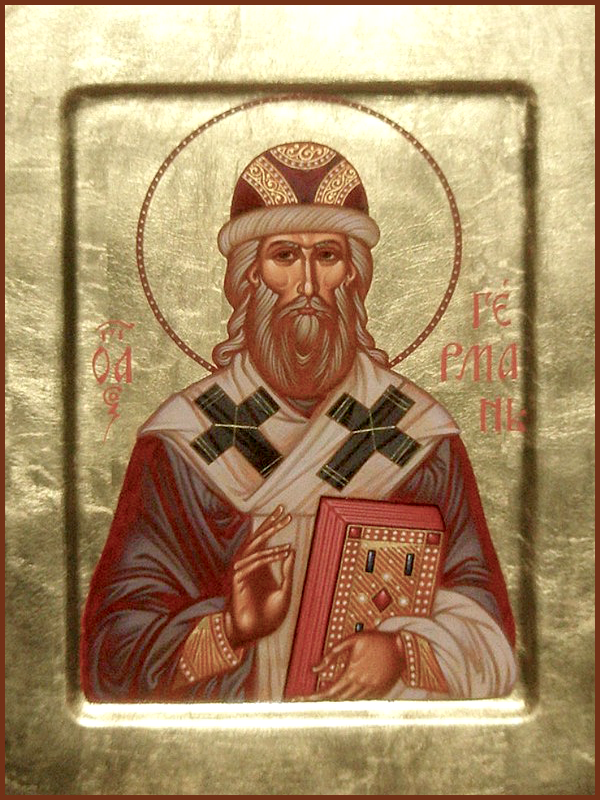
Tomorrow, October 8 The Orthodox Church celebrates the day of remembrance of the transfer of the venerable relics of St. Herman, Archbishop of Kazan and Sviyazhsk. This event, which occurred in 1592, became one of the most significant in the history of the Kazan diocese and is still celebrated as a holiday uniting believers of the Volga region and all of Russia.
Briefly about the saint
Herman of Kazan is one of the three hierarchs of Kazan, along with Gury and Barsanuphius. Of boyar origin, in the world he bore the name Gregory. He began his monastic path in the Joseph-Volokolamsk Monastery under the leadership of the future Saint Gurias. He was the abbot of several monasteries, and in 1555 he became the first archimandrite of the Sviyazhsk Assumption Monastery, a fortified city founded during the conquest of the Kazan Khanate. In 1564, after the death of Guria, he headed the Kazan See.
The saint went down in history not only as a zealous missionary and organizer of church life in the Volga region, but also as a person who dared to expose Ivan the Terrible himself. When the tsar offered him the Moscow metropolitan see, Herman started talking about repentance and the wrongness of the oprichnina. Ivan the Terrible removed him, and after a while — on November 6, 1567 — the saint died in Moscow in 1567. According to Prince Andrei Kurbsky, he was killed on the secret order of the tsar.
Discovery of relics
Herman was buried in the Moscow Church of St. Nicholas the Mokroy, which stood in Zaryadye, next to the courtyard of the Kazan bishops. For twenty-four years his name seemed to disappear in the chronicles — but not in the memory of people.
In 1591 the temple was rebuilt. During the work, the tomb was opened, and the remains of the archbishop were found incorrupt. Healings immediately began from the relics. Rumors of miracles quickly spread throughout Moscow and beyond.
How the transfer was decided
By that time, the Kazan Metropolis was headed by Hermogenes, a man of exceptional firmness, the future patriarch and one of the main figures of the Time of Troubles. He turned to Tsar Fyodor Ioannovich and Patriarch Job with a request: to transfer the relics of St. Herman to the Sviyazhsk Assumption Monastery — where he was abbot and where the most fruitful years of his ministry passed.
The residents of Sviyazhsk supported the petition. The Tsar and the Patriarch agreed.
The path and the meeting
In the autumn of 1592, the religious procession moved from Moscow to the Volga. The path was not short — several hundred miles along autumn roads. Throughout the procession, the relics were accompanied by pilgrims flocking to the shrine.
At the walls of the Assumption Monastery, the relics were met by Metropolitan Ermogen himself with the brethren and townspeople. According to church custom, Hermogen performed the funeral service with the bishop’s rite — even though the saint was buried and buried a quarter of a century ago, this was required when the relics were transferred.
The relics were installed in the altar of the Assumption Cathedral on the right side. Chroniclers wrote: when the coffin was brought into the temple, a fragrance spread throughout the monastery. Then, according to legend, two blind men regained their sight. Many healings occurred in those days.
The meaning of the holiday
The transfer of the relics of St. Herman became for the Kazan land what the discovery of the relics of Sergius of Radonezh was for the whole of Russia: a sign that the righteous does not leave his flock even after death. The memory of him lives not in books, but in the shrine itself.
The Sviyazhsk Monastery became a place of pilgrimage for many centuries. People from all over the Volga region came and went to the relics — peasants, townspeople, clergy, even non-believers, whom the saint attracted to the faith during his lifetime not by force, but by kindness. The day of October 8 was celebrated in the monastery with particular solemnity: a religious procession was held, the Divine Liturgy was served, an akathist was read to the saint.
What the shrine experienced next
The history of the relics after 1592 was not easy. In 1714, Metropolitan Tikhon of Kazan moved them from the altar to the center of the temple to facilitate access for pilgrims — this second transfer also became a holiday (July 6, new style). In 1842, a new cypress shrine overlaid with silver was made for the relics. In 1888, when he changed his clothes, traces were found on the saint’s body that indicated a violent death — two blows that cut off his head. This confirmed Kurbsky’s version of the murder by the guardsmen.
After the revolution, the monastery was closed. In 1923, the Bolsheviks tried to open the cancer — according to legend, such a terrible tornado rose over the Volga that those gathered fled in horror. But in 1925, the monastery was still liquidated, and the relics disappeared.
A miraculously preserved particle was found in 2000 under the altar of the cemetery church of the Yaroslavl Wonderworkers in Kazan. It was divided between the Sviyazhsk and Kazan St. John the Baptist monasteries, where the relics are still available for veneration today.
What is this day about
October 8 is not just the anniversary of one event. This is the day when the Church reminds: righteousness survives persecutors. Saint Herman, who died because he dared to tell the king the truth, returned to the people — first with his relics in 1592, then after seventy years of oblivion in 2000. Every time — in spite of everything.
The monastery that he founded on the island at the confluence of the Volga and Sviyaga still stands. Reliquary with a particle of relics — new, old lost. But the reason for which the transfer was made four centuries ago remains: people come, pray and receive help.
On this day, a festive service is held in churches that have a particle of the relics of the saint. Saints of Kazan are commemorated — Herman, Gury and Barsanuphius
Charity FundndHoly Land
Investments in Soul! News