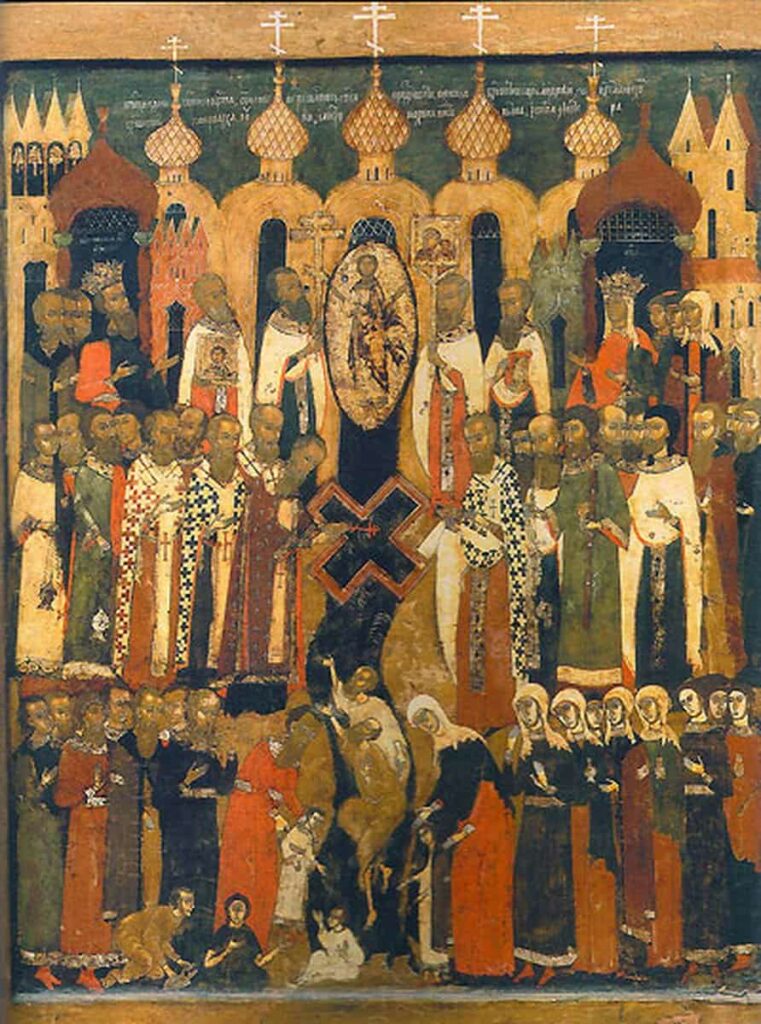
Orthodox believers celebrate on August 14 a holiday, the full name of which is the Origin (expression) of honest trees of the Life-giving Cross of the Lord. In the national calendar, this date is known as the Honey Savior.
The word “origin” in the title is not related to genealogy. This is a historically inaccurate translation of the Greek term proodos, meaning a solemn procession or procession. In the church environment, a more refined version is often used — «the removal of honest trees.» By “honest trees” are understood the parts of the Cross on which Jesus Christ was crucified.
The tradition originated in Constantinople in the ninth century. August was considered an unfavorable month in Byzantium due to frequent outbreaks of infections. For the protection of the city and the consecration of the streets, the preserved part of the Life-Creating Cross was taken out of the imperial treasury. The relic was installed in the temple of Hagia Sophia, after which multi-day processions began. The shrine was carried along the roads, inviting residents to attach themselves to it. Greek liturgical sources of the XIX century confirm that the custom was established «to consecrate places and to abhor diseases.»
The history of the shrine itself dates back to the IV century. According to church tradition, Queen Helena, Equal-to-the-Apostles, discovered the Cross of the Lord in Jerusalem. The authenticity of the relic was determined through a miracle: touching the true Cross healed a seriously ill person. Hence the name “life-giving”. Over time, the shrine was divided into fragments that spread to different centers of the Christian world. One of the parts came to Constantinople and became the subject of August removal.
In Russia, the holiday was fixed after the transition to the Jerusalem Charter at the end of the XIV century. The national historical context was added to this date. In 1164, Prince Andrei Bogolyubsky defeated the Volga Bulgars. According to the chronicles, the army was accompanied by the icon of the Virgin and the Honest Cross. The success of the campaign was perceived as a sign of divine intercession, which increased the veneration of shrines on this day.
In the modern practice of the Russian Orthodox Church, a divine service is celebrated in the evening, and in the morning – a liturgy. The key point of the holiday is to bring the Cross to the middle of the temple for worship. Also on August 14, water is traditionally consecrated, which echoes the ancient Byzantine ritual. In parallel, the temples consecrate the honey of the new collection, so in the folk tradition, the date received the second name — Honey Savior.
Memorial Day
14 August
Charity foundHoly Land.
Soul investment! News