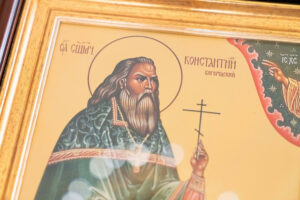
On July 17, 2026, the Orthodox Church commemorates the tragic death of the last Russian monarch and his household. Divine services are held throughout the country, the central of which will unfold in Yekaterinburg — on the site of events a century ago.
The main stream of pilgrims will go to the Temple-on-Blood, standing where the basement of the Ipatiev House used to be. At night, a liturgy will be held here, after which tens of thousands of participants will go to the monastery on Ganina Yama. This route repeats the path taken by the remains of the dead in 1918. The memorial program in the region is traditionally united by the festival “Tsar’s Days”.
The tragic list includes eleven people. In addition to the Emperor himself, it includes the wife of Alexander Fedorovna, four daughters — Olga, Tatiana, Maria, Anastasia — and the young heir Alexei. Near them in the last minutes were close. Life-medician Evgeny Botkin, who died with his family, was glorified as righteous. The fate of three more servants was different: camera-lackey Aloisy Trupp and room girl Anna Demidova belonged to the Western branches of Christianity, and therefore did not enter the Orthodox martyrology, so as not to violate their lifetime choices.
The Moscow Patriarchate approved the church act on the list of saints in 2000, the foreign branch did it two decades earlier. Their ranks are passion bearers. The definition emphasizes not a political role, but a spiritual appearance: the ability to face death without anger and curses against the torturers.
Before the image of these saints, petitions are most often heard about the harmony in the family, the fidelity of spouses and the reasonable upbringing of children. The cohabitation of crown-bearers, who raised five heirs, is perceived by believers as one of the standards of domestic piety.
In prison, the family spent almost a year and a half. Immediately after the February abdication, they were isolated in a residence near St. Petersburg. Then the stage to Tobolsk, and in the spring of 1918 — the last move to the Urals. The doom house belonged to engineer Ipatiev. Historical symbolism is associated with this name: three centuries earlier, the young Mikhail Romanov was called to the kingdom in the Kostroma Ipatiev monastery. So the beginning and end of the dynasty were ringed.
The life of the Emperor was marked by other significant coincidences. His birthday – May 19 according to the modern calendar – he celebrated on the holiday of the biblical sufferer Job. The emperor repeatedly noted that he would draw a parallel between his own share and the fate of this saint.
It was during his reign that more ascetics were included in the Church as saints than in the previous two centuries. Thanks to the persistence of Nicholas II, Seraphim of Sarov was glorified in 1903.
Since the late nineties, cases of the appearance of incense oil on the images of royal passion-bearers have been recorded. The first massive spike in such reports coincided with the 1998 financial crisis. Subsequently, the icons began to flow before various national events.
The clergy advise the laity to devote this day to inner silence and acts of mercy. Excessive fun, loud celebrations and the use of hot is considered alien to the spirit of the date.
Remembrance days
July 17
Charity foundHoly Land.
Soul investment! News