Four centuries ago, builders stumbled upon a burial site that changed the history of the monastery on Sviri. This year, the anniversary of that find is an anniversary.
Holy Trinity Monastery in Leningrad region receives guests on April 30. This date coincides with two events: 385 years ago, the relics of the founder of the monastery were first extracted from the earth, and at the same time — exactly 520 years ago — the monastery itself was founded. The divine service on this day will be held by Metropolitan Varsonofy of St. Petersburg and Ladoga.
Preparation for the celebrations is carried out by a special group of the Tikhvin diocese. At the end of March, its participants gathered in the St. Petersburg Church of the Intercession of the Most Holy Mother of God – at the compound of the Antoniyev-Dymsky Monastery. The meeting was held by Bishop of Tikhvin and Lodeinopol Mstislav.
Peasant son with Oyati
The future saint grew up in the village of Mandera on the Oyat River — in the XV century it was the Novgorod land. His parents named him Ammos. The family was poor, but raised children in faith. The young man early began to be burdened with worldly life and dreamed of monasticism — especially about Valaam, rumors of which reached their edge. A meeting with the Valaam monks finally strengthened him in this decision.
At the age of twenty-six, Ammos secretly left his father’s home, not wanting to quarrel with his parents. He reached Valaam, took tonsure under the name Alexander and spent more than ten years in the monastery. He spent some of this time in solitude on a small island that is now called the Saint.
Around 1487 it went southeast, where the Svir River winds among the dense forests. On the shore of Roshchinsky Lake, he built a hut and lived alone for several years, eating forest grasses. Rumors about him reached neighboring villages, and people began to come to him.
Over time, brethren formed around the hermit, and at the insistence of the church authorities he took the rank of priest and became abbot of the grown monastery.
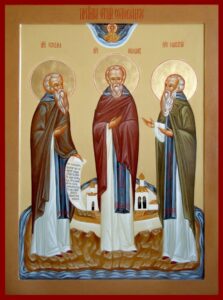
Tradition preserved the story of a vision that strengthened Alexander in his undertaking: three men in light robes came to him and ordered him to build a temple in the name of the Holy Trinity. With the support of Grand Duke Vasily Ivanovich on the specified place was built.
stone cathedral. The monk died in August 1533 at the age of eighty-five.
According to his will, he was buried at the Church of the Transfiguration of the Lord. Fourteen years later, the Moscow Council listed him as a saint.
Finding under the floor
In the spring of 1641, repair work was carried out in the Transfiguration Church. Exactly.
Then the burial was discovered — the body remained incorruptible after more than a hundred years.
after death. The relics were transferred to silver crayfish and left in the same cathedral. Day
Finds — April 17 in the old style, or April 30 in the new — entered the church.
calendar as a separate holiday.
In 1918, everything changed. When the monastic property was seized, the cancer was opened.
The remains were taken to Petrograd and transferred to the Military Medical Academy. The abode is closed.
A few years later. The relics settled in the anatomical museum as an unnamed exhibit and
It was there for seven decades.
After the revival of the monastery, the brethren began searching. Examination established
The personality and confirmed the amazing preservation of tissues. In July 1998, the relics
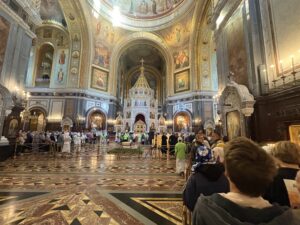
They solemnly returned the churches. Now they are in the Transfiguration Cathedral of the monastery and
They are open to believers.
Remembrance days
April 30th.Obtaining relics
June 3rd Cathedral of Karelian Saints
June 21st- (transient)— Cathedrals of Novgorod and St. Petersburg Saints
September 12
Charity foundHoly Land.
Soul investment! News