

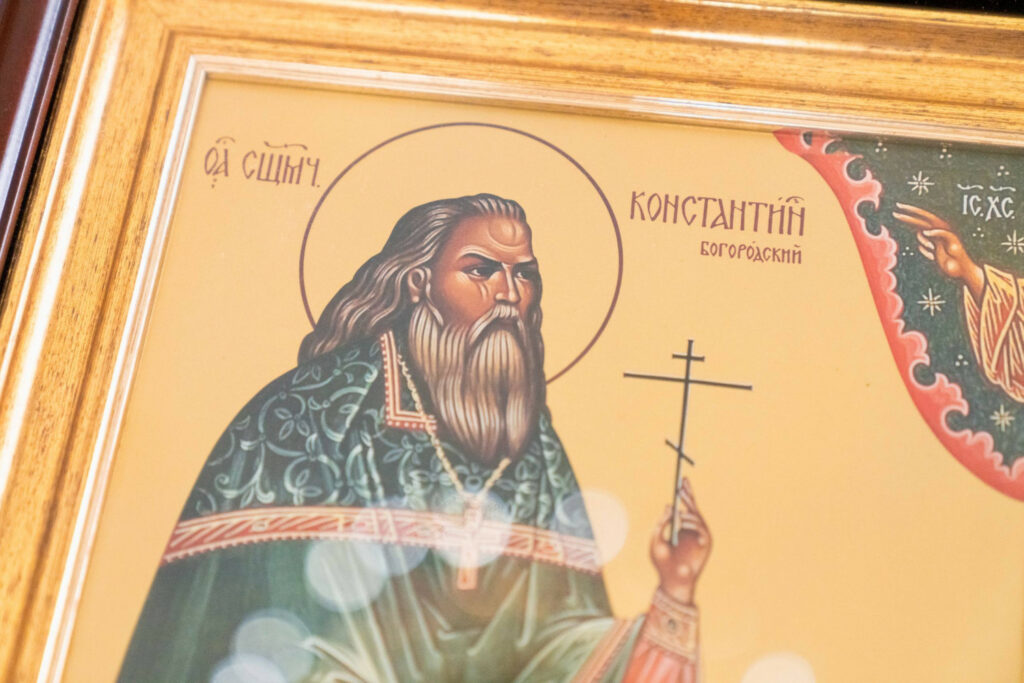
In quiet Pereslavl-Zalessky, steeped in history, a special tension is now felt — the city is preparing for the discovery of the relics of the holy martyr Konstantin Snyatinovsky. For believers, this is not just an archaeological find, but an opportunity to touch the living memory of a person who remained faithful to his duty and his faith to the end.
It all started with painstaking work in the archives. For several years, the commission for the canonization of saints of the Pereslavl diocese collected bits and pieces of information about the fate of Father Constantine: it studied documents, compared memories, and looked for any mention of the place of his burial. This story is not simple: the holy martyr died in 1918, and then they tried not to advertise the circumstances of his death and even the exact place of burial. But the memory of him lived in the stories of parishioners, in quiet conversations, in family legends — and it was these threads that ultimately led to the right place.
The starting point for field work was designated October 1, 2026. On that day, at the site of the supposed burial, Bishop Feoktist of Pereslavl and Uglich, together with the clergy, performed a prayer service. This was not just a formal ceremony, but a kind of blessing for work: after all, delicate, almost jewelry work lay ahead. Already on October 4, specialists from the Institute of Archeology of the Russian Academy of Sciences under the leadership of Vladimir Zeifer began work. Next to them were representatives of the diocese, including priest Anthony Zverkov, chairman of the canonization commission. It was through joint efforts that they found the supposed remains.
But the most difficult thing is yet to come. What has been found has yet to be confirmed. Archaeologists and scientists understand that in order to say with confidence that these are indeed the relics of a holy martyr, serious research is needed. Now they are planning to conduct an anthropological examination: based on the structure of the bones, experts will be able to determine the gender, approximate age, as well as possible traces of injuries — the same ones mentioned in the archival descriptions. In parallel, molecular genetic research is planned: they will help establish family ties and provide additional confirmation.
For the residents of Pereslavl, this story is not only about science and religion, but also about the return of lost memory. Father Konstantin was the rector of the Church of St. Peter, Metropolitan of Moscow, for almost thirty years, and for many generations of parishioners he was not just a priest, but a support, a person to whom they went for advice and support. His fate turned out to be tragic: in April 1918 he was arrested, taken through the entire city, and then shot. The wounds were severe — bullets and bayonets left their mark. The body was thrown near the hospital, but the parishioners were not afraid and buried him behind the altar of his native church — where he served people and God for so many years.
Decades later, in 2001, the Holy Synod of the Russian Orthodox Church canonized Father Constantine as a new martyr and confessor of Russia. And now, after another two decades, the city remembers him again — not only in prayers, but also in real deeds: in excavations, in examinations, in preparation for possible celebrations.
It is interesting that archaeological work also brought unexpected discoveries. Near the Transfiguration Cathedral, literally a few steps from the excavation site, scientists discovered a red brick stove duct and more than a hundred artifacts from the 12th–13th centuries. Among them are glass bracelets, an amber cross, and a moonlight. These finds remind us that the land of Pereslavl preserves not just one story, but many layers of memory, and each of them is worthy of attention.
If the examination confirms the authenticity of the relics, a solemn ceremony of glorification is ahead. Most likely, it will be held in one of the main churches of the city — Alexander Nevsky or Vladimir Cathedral. But it’s too early to talk about this: scientists don’t like to rush to conclusions, and believers don’t like to rush to celebrations. Nowadays, accuracy, respect for the past and careful attention to every detail are more important.
Charity FundndHoly Land
Investments in Soul! News


