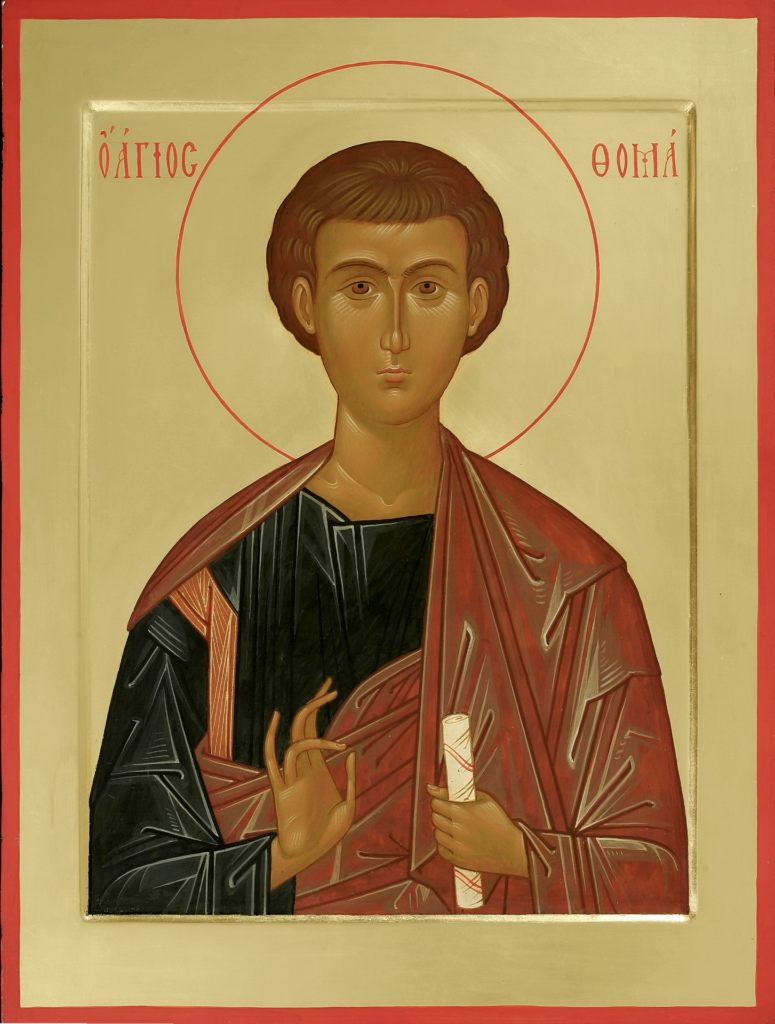
October 19 in the Orthodox calendar is the day of memory of the Apostle Thomas. For many, this name immediately evokes the familiar phrase “Thoma the unbeliever.” But behind this popular expression is not a reproach, but a history of the living human way: doubt, search and, in the end, firm faith.
The apostle Thomas was one of Christ’s closest disciples. Before he met the Master, he lived an ordinary life, engaged in the business that he fed—fishing. Everything changed when he followed Christ. In the Gospel, Thomas is remembered not only for his famous doubt, but also for his rare devotion. Even before the Resurrection, when the disciples were trying to stay out of danger, Thomas firmly said, “Let us go and die with him.” These words are not bravado, but a willingness to go to the end.
The most famous episode with Thomas is associated with the Resurrection of Christ. When the other apostles told him about the appearance of the risen Lord, Thomas could not take the news on faith. He admitted that he would only believe if he saw the wounds with his own eyes and could touch them. And Christ came to him. Not to expose, but to give the very proof that Thomas needed. Seeing the Master, the apostle uttered words full of deep recognition: “My Lord and my God.” This exclamation is not merely an acknowledgement of a fact, but a confession of a faith born out of a personal encounter.
After Pentecost, Thomas went to preach. By lot he got the eastern lands. His journey passed through Palestine, Mesopotamia, Parthia, Ethiopia, and ended in India. The apostle didn’t just talk about Christ, he changed lives. Through his preaching, the son and wife of the local ruler came to faith. For this, Thomas was captured, tortured and executed. But the seeds sown by him gave strong sprouts: the Christian community in India survived for centuries.
In folk tradition, this day was called Fomin Day or Thomas Khlebnik. By the middle of autumn, the peasants tried to complete all the preparations for the winter. On this day, they examined the barns, checked the stocks of grain, flour, vegetables, estimated whether there were enough supplies before the new harvest. It was accepted to bake bread and pies — and not only to feed the family, but also to put part of the pastry in the bins as a sign of prosperity and care for the future. Hence the saying: “Take everything to Tom”. Crome is an ancient word that meant a storehouse for grain. He hears a simple, earthly meaning of the day: to put in order what you have, and thank for it.
Today, on October 19, believers are trying to come to the service, to pray to the Apostle Thomas, to ask him for help in strengthening the faith. But the meaning of this day is not reduced to rituals. It is about something else: about how doubt can become a stepping stone to true faith, if a person does not turn away from the search, but goes on. The apostle Thomas reminds us that faith is not the absence of questions, but the willingness to hear and follow the answer.
Charity fund
Holy Land.
Soul investment!
News