September 14The Orthodox Church celebrates the beginning of the new year — the church new anniversary, or the beginning of the index. Behind this name is a long history, which begins in ancient Rome and through Byzantium reaches Russia.
From tax cycle to church holiday
The word “indict” has Latin roots.indictio, which means «announcement.» In the Roman Empire, this was the fifteen-year cycle associated with taxation. At the beginning of each such cycle, the emperor declared a revaluation of property and fixed the amount of taxes. It was a purely practical, administrative measure – there was nothing church in it.
For a long time, the beginning of the index was not tied to a specific date. It was only around 462 that it was moved to September 1, and in 537 Emperor Justinian I legislated it for the entire official chronology of the empire. In Greek, the word “indict” gradually became synonymous with the word “year”. Therefore, the expression “new indict” began to be translated as “new summer” – hence the Russian “new anniversary”. The Eastern Christian Church adopted this tradition, and September 1 in the old style became the day of the beginning of the church year.
The spiritual meaning of the holiday
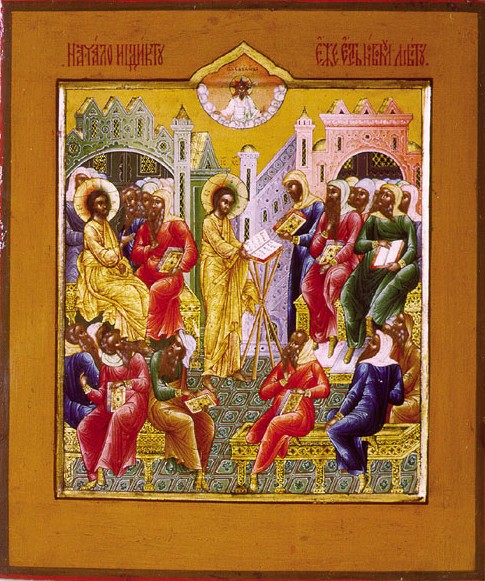
The worship of this day is built around the Gospel episode, where Christ in the Nazareth synagogue reads the book of the prophet Isaiah and says that he came “to heal the broken of heart … to preach the favorable summer of the Lord.” This image of the “year of the Lord” – a time of mercy and salvation – became the basis for understanding the new church year as a period in which everyone expects God’s help.
The Church year opens a cycle of recollections of the events of the New Testament. The first big holiday of the new cycle is the Nativity of the Most Holy Mother of God – September 21, just a week after the New Year. And the cycle of the Assumption of the Most Holy Mother of God closes – August 28. It turns out that the year begins and ends with the figure of the Virgin.
How the New Year was celebrated in Russia
Together with Christianity from Byzantium, the September chronology also came to Russia. But the people for a long time kept the tradition to consider the beginning of the year on March 1 — it was associated with the awakening of nature and the approach of spring. Only in 1492, in the 7000th year from the Creation of the world according to Byzantine chronology, the New Year officially became a church-state holiday.
On this day in Russia made a special order of flying. The bishop with the procession went to the city square, chants were sung, the Apostle and the Gospel were read, after which the procession went to the church for the liturgy. It was a solemn, city-wide event.
Everything changed in 1700, when Peter I postponed the beginning of the civil year to January 1, and introduced the chronology from the Nativity of Christ instead of the Byzantine – from the Creation of the world. The solemn order of the yearning was stopped, but the holiday itself in the church calendar was preserved. Today, after the liturgy, a thanksgiving prayer is served.
The beginning of the indict is one of those holidays in which state necessity, church tradition and people’s way of life are intertwined. The tax cycle of ancient Rome turned into a spiritual symbol of renewal, and the September New Year, having survived the change of calendars and reforms, is still celebrated by the Orthodox Church — as a day when believers ask for blessings for the whole coming year.
Memorial Day
September 14
Charity foundHoly Land.
Soul investment! News