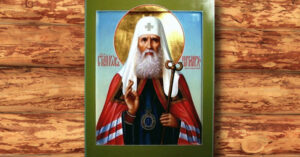
Today, Orthodox believers honor the memory of several saints at once. The central place among them is occupied by St. Job, the first patriarch in the history of Russia, whose relics were solemnly transported to the capital in the middle of the 17th century.
A native of the Tver Staritsa, in his youth he ended up within the walls of the local Assumption Monastery — his father himself brought him there to be raised. It was there that he was tonsured a monk. Fate brought the monk together with Ivan the Terrible: the Tsar, having visited the monastery around 1569, paid attention to the young monk and contributed to his rise. Thus began Job’s ascent up the church ladder — through the abbotship of Moscow monasteries, the episcopal see in Kolomna, the archdiocese of Rostov the Great and the Moscow metropolis.
The patriarchate became the pinnacle. In January 1589, in the presence of Patriarch Jeremiah, who arrived from Constantinople, Job was elevated to the high priestly throne — established specially for the first time in the history of the Russian Church.
The end of his ministry came during the troubled years. When Moscow surrendered to the impostor’s troops in 1605, the patriarch did not bow his head. He openly called False Dmitry a fugitive monk Grigory Otrepyev, sent accusatory letters to the cities, and imposed an anathema on him. The retribution turned out to be cruel: armed people burst into the Assumption Cathedral right during the service, tore off his vestments and sent him back to Staritsa under guard.
There, in the monastery where he spent his childhood, Job spent his last years and died in June 1607. Forty-five years later, in 1652, the remains of the saint were taken to Moscow and placed in the Assumption Cathedral of the Kremlin. The Church glorified him as a saint in 1989.
In addition, April 18 is the day of remembrance of the martyrs Agathopods and Theodulus. A deacon and reader from the early Christian community, they were executed in the era of Emperor Diocletian, when the persecution of Christians reached a special scale.
Charity FondHoly Land
Investment in the Soul! News