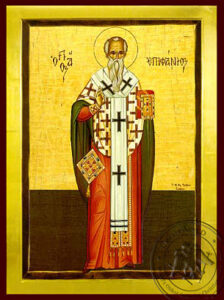
The prince of Persia, the heir of a great fortune, chose life as a hermit, for only this brought him a feeling of great union with the Lord. Considering himself unworthy of earthly goods, Saint Onuphry withdrew from the monastery, where he spent his youth and settled in the Egyptian desert. Hunger and hunger were his constant companions. Morning dew was the only source of moisture, and the roots and fruits of few plants gave meager food.
After 60 years, another righteous man came to his cave, Paphnutius. He was struck by the holiness and strength of the deserter’s spirit. After communicating with Onuphry, Paphnutius recorded the story of his life. After 30 years of hermitage, the Lord blessed the elder with a date palm, which gave crops all year round and a small spring so that water was available not only in the morning, but all the time.
The old man’s clothes were his own hair. Onuphry also said that an angel visits him every Sunday, bringing Holy Communion.
Paphnutius witnessed a miracle. During the conversation, by evening, a bar of white bread appeared on the stone. To the admiring exclamation of Paphnutius, Saint Onuphry explained that the angels supplied him and the other deserters with bread. After the morning prayer, the elder’s face changed. He told Paphnutius that the Lord was calling him to himself. Paphnutius was sent to bury the saint. The elder asked him to tell other people about his life. Paphnutius asked for a blessing on the desert, but Onufry ordered him to return to the monastery. Then the elder lay down on the ground and died. Paphnutius buried him in a stone deck, filling him with pebbles from above. He decided to stay in the cave. During the evening prayer, it suddenly collapsed, the palm tree dried up, the water from the spring disappeared. Paphnutius realized that he had no blessing to stay in this place and returned to the monastery.
Remembrance days
June 25
The Holy Land Charitable Foundation
Lives of Saints