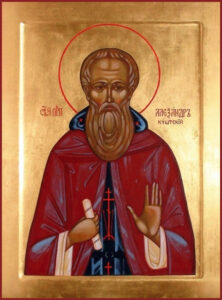
In 123 AD, seventeen Georgians who served at the court of the ruler of Caucasian Albania were executed in the territory of historical Armenia. The reason for the massacre was the categorical refusal of former dignitaries to return to pagan cults.
High-born Georgians were part of the inner circle of the Albanian ruler. Their accompanying mission led to Artashat, the then capital of Armenia, where they arrived with Princess Satenica, intended to marry the Armenian monarch Artaxar.
In the city, the nobles met a Christian mentor named Chrysos, a Greek who received a dedication from the Apostle Thaddeus. Heard sermons pushed the court to a complete break with the past. Together with their spiritual father, they went to Mesopotamia and were baptized right in the Euphrates. During the sacrament, according to the surviving evidence, they were given to see the Savior. Right by the river, the converts established a bowing cross, called the Cross of the Annunciation, and received other names from Chrysos. The eldest of the group from Bagadras became Sukhia; the others were called Andrei, Anastasius, Talale, Theodorite, Ivkhirion, Jordan, Kondrat, Lucian, Mimnenos, Nerangios, Polyeuctus, Jacob, Phocas, Domentian, Victor and Zosima.
When Chrysos died, the leadership of the community passed to Sukhiy. Former aristocrats chose for life an impregnable mountainous area near the village of Bagrevandi — Sukaketi mountain, where they did without any life, getting food by collecting wild herbs and using only spring water.
The changes have not gone unnoticed. The new Albanian ruler Datianos sent an armed detachment to the hermits under the command of Barnapas. The envoy was ordered to persuade the former courtiers to renounce Christianity and take up their former positions. All the persuasion was met with inexorable rejection. Then followed a public punishment: the condemned were crucified on the ground, fixing their limbs cross-shaped, and put to fire. During the torment, one of the sufferers, Kondrat, began to recite Psalm 21, and the others picked him up. The bodies after the burning were cut into pieces and scattered along the slopes — hence the name «Mesukevsky», that is, Sukaket martyrs, was fixed.
The time of execution is determined differently. Some materials point to the year 123, others – to the 130th, and the Athos parchment manuscript of the XI century from the Iberian monastery dates the event to the year 100.
The remains of the executed remained incorruptible and unharvested until the fourth century. Local followers of Christianity buried them in coffins, and the names of the martyrs were found carved into the rock. Subsequently, the Hieromartyr Gregory, the enlightener of Armenia, founded a temple and a monastic monastery there. Nearby with time hammered the source, revered as healing.
Memorial Days
28 April
22 November(transient)— The Cathedral of Alan Saints
The Holy Land Charitable Foundation
Lives of Saints