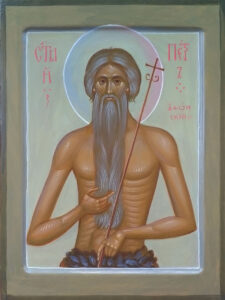
In the Greek Thessaloniki, believers remember the Monk Theodore of Thessaloniki, a saint of the ninth century whose life and posthumous miracles have attracted pilgrims for centuries. The Monk, born in 812 on the island of Aegina, went from laity to wonderworker, and her incorruptible relics exuded myrrh even years after her death.
The future saint, in the baptism of Agapus, was born in the family of Protopresbyter Anthony. Having lost her mother early and abandoned by her father, who accepted monasticism, she married at a young age. After a series of raids by Arab pirates on Aegina, which claimed the life of her deacon brother, the family, on the advice of Father Antony, moved to Thessaloniki. There Agapa gave birth to three children, but only the eldest daughter survived. After experiencing the loss, the couple decided to dedicate the girl to God — at the age of six, she was tonsured with the name of Theopist in the monastery of St. Luke.
Widowed, 25-year-old Agapa gave away the property and after her daughter went to the monastery, taking tonsure with the name of Theodore. In the monastery of St. Stephen, under the guidance of the abbess Anna, perhaps the most severe test of her life unfolded. The abbot, seeing that family attachment interfered with the spiritual growth of both nuns, for fifteen years banned any conversation between mother and daughter. They lived in the same cell and communicated exclusively through intermediaries, until Feodora’s illness softened the abbess’ decision.
Life has preserved an example of the exceptional obedience of the saint. Once Abbess Anna, for educational purposes, ordered Theodora to spend a winter night in the courtyard under the pouring rain. Later, the monk confessed that she accepted the punishment with such faith that she did not feel cold, feeling “in a warm bath.”
The Monk Theodora departed to the Lord on August 29, 892 at the age of eighty. Witnesses said that at the time of her death, her face shone. Miracles began immediately: the seriously ill Deacon Demetrius, who arrived to say goodbye, received healing immediately after kissing the deceased.
Ten months after the burial, the marble slab on the tomb split itself. Soon, with the blessing of his daughter, the Theopists relics were transferred to stone crayfish. At the same time from the remains began abundant myrrhage. To collect the shrine in the legs of the tomb made a special hole. Pilgrims of the Paleologian dynasty, three hundred years after the saint’s death, took oil and myrrh in small lead bottles with her image. Today, the oldest fresco with the image of the Monk Theodora dates from the XI century and is located in the temple of St. Sophia in Thessaloniki. In 1430, the Turks who seized the city broke up the holy relics.
Memorial Days
April 18
The Holy Land Charitable Foundation
Lives of Saints