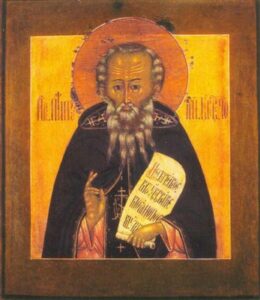
In the second half of the XII century Turov land received a bishop, whose name later became one of the most revered in the East Slavic tradition. Cyril, a native of the Pripyat city, went from the heir of wealthy parents to a reclusive, and then a church polemicist and author of festive sermons.
The exact date of his birth has not been established. It is believed that these are the thirties of the XII century. The young man received a comprehensive education, including classes with Greek teachers. However, his career prospects did not occupy him: after growing up, he disposed of his property and went to the local Borisogleb monastery.
In the monastic period, Kirill was engaged not only in asceticism. He is credited with teachings for the brethren, in particular, a discussion about the monastic rank through the prism of the Old and New Testaments. The key idea of these texts is submission to the abbot as a necessary condition for salvation.
The next stage is going into the pillar. The retreat lasted several years. It was then that he began systematic work on biblical interpretations and prayers. He was approached by people seeking spiritual advice.
The growth of authority led to the election to the episcopal office. The exact chronology is controversial, but it is known that in 1169 Cyril already acted as a bishop. That year, the case of Theodore, who occupied the Vladimir cathedra and tried to separate himself from the metropolitan center, was investigated. The Archbishop of Turov participated in the conciliar condemnation and sent Prince Andrei Bogolyubsky a series of letters, in which he examined the causes of Rostov’s disturbances.
Later, the saint voluntarily resigned. By 1182, Lawrence was already listed at the department. Moving away from administrative affairs, Kirill focused on creativity. It is assumed that he compiled a cycle of words for the entire liturgical year, although only part of the manuscripts survived. The works were included in the collections along with the texts of the Church Fathers.
He died on April 28, approximately in 1183. The nickname “Russian Chrysostom” was fixed for him during his lifetime. At the same time, the author himself assessed himself with restraint, comparing his work with the selection of ears, and not with the work of a reaper.
Memorial Days
May 11
July 11 (transient)— Cathedral of Belarusian Saints
Lives of Saints