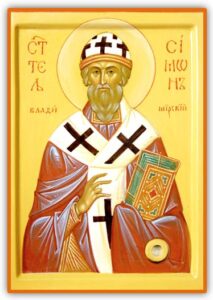
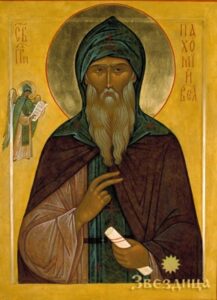
St. Plato, whose memory is celebrated by the Church in April, entered the history of Christianity as a staunch fighter for the purity of the doctrine of faith and an irreconcilable opponent of iconoclastic heresy. Born in 735 in the family of the pious Sergius and Euphemia, the future saint was orphaned early. The education of the boy was taken up by relatives who gave him not only the basics of literacy, but also instilled a love for spiritual knowledge.
Having received a solid inheritance in his youth, Plato did not waste it on an idle life. On the contrary, by personal labor and strict discipline, he managed to increase his fortune, but his wealth did not captivate his heart. Having reached a certain age, he takes a decisive step: releases all servants and workers, distributes property to the needy and leaves the world, taking tonsure in the monastery “in Symbolech” on Olympus.
Within the monastery walls, the monk gained authority by humility and unceasing prayer.
Free from divine services, he devoted time to rewriting books and compiling collections of works of the Church Fathers. In 770, after the death of Abbot Theoctistus, the brethren unanimously elected 35-year-old Plato as abbot. Twelve years later, he rejects the offer to occupy the Nicomedia See and retires to the area of Sokudion, where, together with his nephews — the future St. Theodore Studitus and St. Joseph — he establishes a new monastery with a temple in the name of the Apostle John the Theologian.
The most vividly confessional feat of Plato was manifested in the defense of the church canons. In 787 he took an active part in the Seventh Ecumenical Council, convened by Empress Irina and Patriarch Tarasius. Relying on a deep knowledge of the Holy Scriptures, Plato comes out with a harsh criticism of iconoclastic errors and seeks the affirmation of the dogma of the veneration of holy images.
However, the main tests were ahead. In 795, the emperor Constantine VI, having forcibly imprisoned his legal wife Mary in a monastery, married Theodotius. The ceremony, despite the patriarchal ban, was held by Priest Joseph. The Monk Plato, together with his nephew Theodore, openly declared the emperor excommunicated from the Church, for which he was thrown into prison. Freedom came only with the death of Constantine in 797.
The second wave of persecutions fell in the 807th under the emperor Nicephorus, who single-handedly returned the scandalous priest Joseph to the clergy. Plato did not remain silent, for which he spent four years in prison. The Holy Confessor died on April 8, 814 in the Studio monastery at the 79th year of his life, leaving behind him an example of unshakable faith and monastic work.
Memorial Days
April 18
The Holy Land Charitable Foundation
Lives of Saints