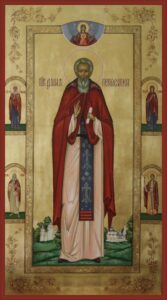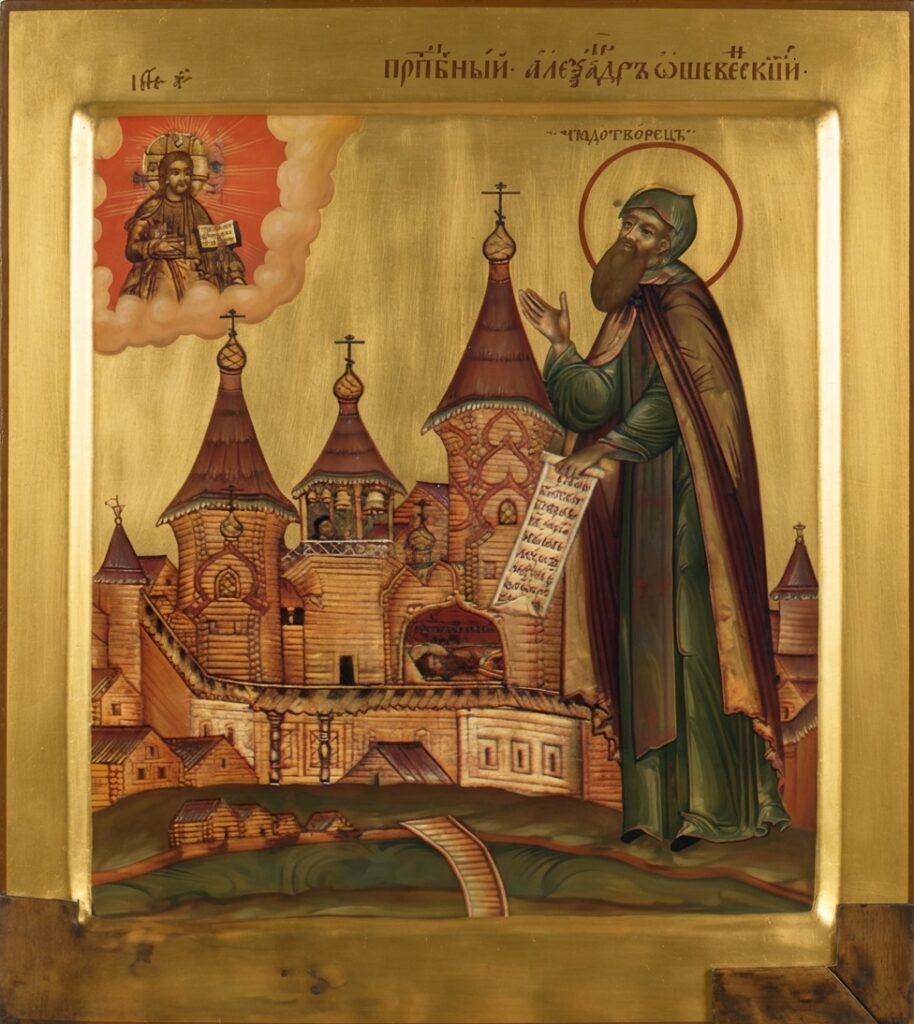
On the day of the memory of the saint, who died in 1479, believers remember the ascetic, whose life was closely intertwined with the spiritual heritage of Cyril Belozersky.
The future abbot was born in 1427 in Vyseozerskaya volost, eighty versts from Belozersk. His parents, farmers Nicephorus and Photinia, prayed for the child for a long time. According to legend, the Mother appeared the Most Holy Mother of God and the Monk Cyril of Belozersky with the promise of a son. The boy was named Alexei. His parents saw him as an assistant in household work, but at the age of eighteen the young man went to the Kirillo-Belozersky monastery and did not return. For six years he performed various obediences, after which he accepted monastic tonsure.
When Nicephorus and Photinia moved to the Churyuga River, the monk Alexander, who sought a silent life, appealed three times to the abbot for permission to leave the monastery. After receiving the blessing, he erected a cross on the site of the future monastery. The construction of the first temple began with the direct participation of the father. Archbishop Iona of Novgorod ordained the ascetic to priesthood and elevated him to the rank of abbot. In the newly formed monastery, the monk introduced a strict social rule: silence was relied on at the common meal, and in cells – unceasing prayer.
The abbot of the monastery Alexander Oshevensky remained for 27 years. A serious illness caused by feelings for the nephews who left the monastery, chained him to bed and deprived him of strength. According to the church tradition, the healing was brought by the phenomenon of Kirill Belozersky himself, who reminded the abbot of this vow not to leave the chosen place.
After the death of the founder, the monastery gradually fell into disrepair. The turning point came after the sleep of Ponomar Mark: he saw St. Alexander, St. Nicholas and Cyril Belozersky, together engaged in construction work. Nearby stood a young man — the future abbot Maxim. It was he who later revived the monastery. Later, during the construction of the new St. Nicholas Church, the builders found the incorruptible relics of the saint.
Elders, who personally knew the ascetic, described him as a man of average height, with a dry face, sunken cheeks and a blond beard touched by gray hair. This verbal portrait formed the basis of the iconographic image preserved in the church tradition.
Memorial Days
May 3
June 3— Cathedral of Karelian Saints
July 11(transient)— Cathedral of Novgorod Saints
November 1— Cathedral of Saints of the Archangel Metropolia
The Holy Land Charitable Foundation
Lives of Saints