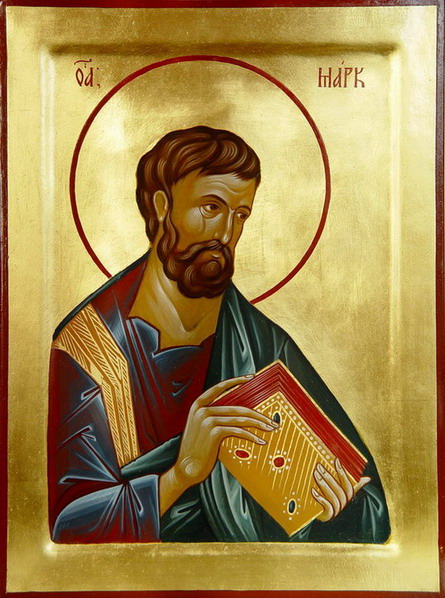
The starting point of biography is the Jewish capital. The family owned real estate near the Garden of Gethsemane; her mother, Mary, provided rooms for private meetings of followers of the executed Master. His maternal uncle is Barnabas, a prominent figure in the early Christian movement. The text of the second Gospel contains a short scene: when Jesus was arrested, a young man wrapped in a piece of cloth was tied up behind him. The guards tried to arrest him, but he escaped and fled without clothes. Later tradition says that it is about Mark.
The geography of his movements is impressive. First — Antioch, Seleucia, the island of Cyprus. In Pafa, the young man observed Paul’s conflict with the magician Elima, which ended with a temporary loss of vision in the latter. Then the paths of the apostles diverged, and Mark found himself in Rome under Peter. Here he acted as a stenographer: he recorded a series of oral stories of the elder comrade about miracles and the preaching of Jesus. Thus, the text was formed, designed for an audience that grew up outside Judaism. His central motive is God’s ability to act against human weakness.
The Egyptian epic began with a private visit to Alexandria. The local craftsman Ananias, who repaired the shoes, the missionary cured the injured brush. He believed, was baptized, and the neighbors followed. On this foundation, a community arose, later a bishop’s chair and a theological school, through which Clement, Dionysius, and Gregory the Wonderworker would pass. Mark personally designed the rites of liturgy for the Alexandrians. He also preached in Libya, Nectopolis, and deep African regions.
The end came on his return to Alexandria. The crowd came straight to the worship meeting. Beating, dragging through cobbled streets, camera. Night vision is the figure of Christ. The next morning, the bloodied man is dragged back to court. He dies halfway through saying a short prayer. Burn the corpse failed: a sudden thunderstorm front and an underground tremor scattered the assembled. The remains were placed in a stone crypt. Two and a half centuries later, a temple was built over the grave. In the ninth century, the relics were transported to Venice. The symbol of the evangelist, fixed in the visual arts, is a lion, referring to the dominant of his text: the royal power of Christ, to which circumstances and elements are subordinate.
Memorial Days
January 17— The Council of the 70 Apostles
May 8
The Holy Land Charitable Foundation
Lives of Saints